
Data Center Power Is Now a Development Problem. Here Is What That Means.
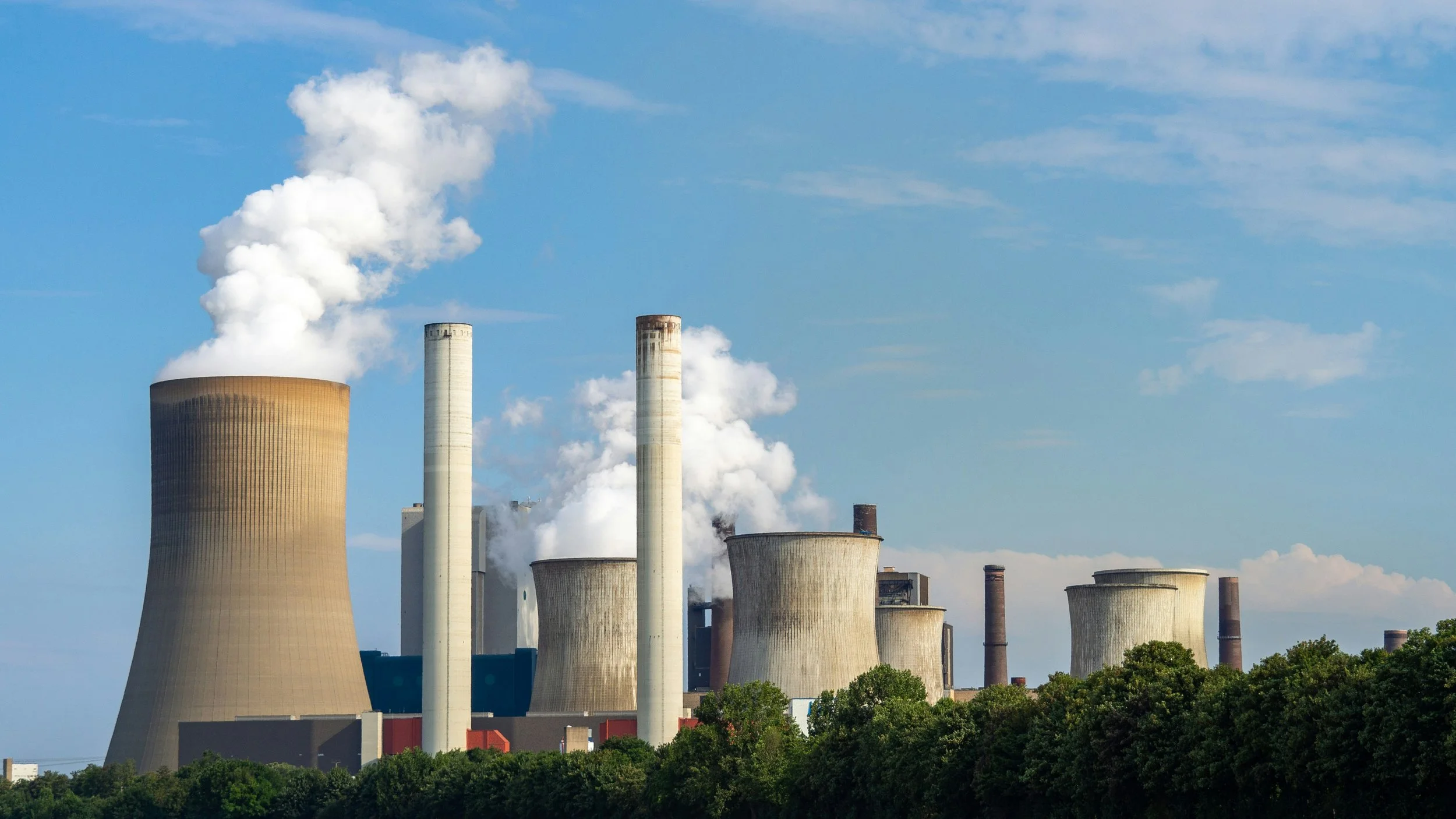
For most of the data center industry's history, power was someone else's problem. A developer found a site, secured permits, built the facility, and called the utility. The utility figured out how to deliver the power. That model worked because data centers, even large ones, were a manageable load for regional grids.
That is no longer the situation.
AI infrastructure has driven data center power demand into territory that regional grids were not designed to absorb. A single hyperscale AI training facility can require more power than a small city. And the pipeline of facilities in development globally is not slowing down. The grid math does not work if every large data center simply plugs in and draws public utility capacity. Policymakers and regulators at the federal level have begun to act on that reality, and the implications for developers and contractors are significant.
What the Federal Policy Actually Says
In July 2025, the Trump Administration issued Executive Order 14318, titled "Accelerating Federal Permitting of Data Center Infrastructure." The order is primarily about speed: streamlining environmental reviews, opening federal lands for data center development, and providing financial support for qualifying projects through loans, grants, and tax incentives.
Buried in the structure of that order is something worth paying close attention to. Wind and solar are explicitly excluded from the list of qualifying energy sources eligible for financial support. The covered generation types are natural gas, coal, nuclear, and geothermal. That is a direct policy signal about what kind of power infrastructure the administration wants built alongside these facilities, and it diverges significantly from the voluntary sustainability commitments many major tech companies had made publicly.
Then in March 2026, the White House formalized the power responsibility question through the Ratepayer Protection Pledge. Amazon, Google, Meta, Microsoft, OpenAI, Oracle, and xAI all signed it. The commitment: these companies will build, bring, or buy their own new generation resources, and will cover the cost of power delivery infrastructure upgrades their facilities require. The explicit goal is that the energy cost burden of the data center boom does not land on ordinary Americans' utility bills.
“The era of large data centers plugging into the existing grid and drawing public utility capacity is giving way to a model where operators are expected to bring their own generation. That changes the development playbook substantially.”
Why Contractors and Developers Are Uncertain
The policy direction is coherent from a grid stability standpoint. But for the people actually building these facilities, it introduces a category of complexity that most data center programs were not designed around.
Power generation is a different discipline than data center construction. Civil and MEP contractors who know how to build world-class facilities do not necessarily have experience designing, permitting, and delivering a dedicated generation asset. The vendor relationships are different, the regulatory process is different, and the timeline expectations are different. A natural gas turbine interconnection can take years to work through utility and state regulatory processes, far longer than the data center construction itself.
The financing picture also changes. A data center with an attached generation asset is a more complex underwriting proposition than a standalone facility. How lenders price risk, how investors structure returns, and how development partners share responsibility across a combined project are all still being worked out. There is not yet a standard playbook.
On top of that, the federal policy framework is still evolving. The executive order and the Ratepayer Protection Pledge establish a direction. The specific regulatory and contractual structures that will govern power procurement, interconnection, and cost recovery at the state level are still being developed. The Department of Interior, for example, has yet to identify any sites on its roughly 530 million acres of public land for data center development, despite holding more land than any other federal agency and being specifically directed to do so by the order.
What Generation Options Actually Look Like
Natural gas is the practical near-term answer for most projects. It can be deployed at scale within timeframes that are at least plausibly aligned with data center construction, permitting processes vary by state but are generally more established than for newer technologies, and the infrastructure to deliver fuel exists in most target markets.
Nuclear is generating real interest, particularly small modular reactors designed for industrial load. The administration has moved to accelerate SMR permitting, and several tech companies have signed offtake agreements with SMR developers. The challenge is timeline: even with streamlined permitting, SMR projects are measured in years, not months.
Geothermal is viable in specific geographies, primarily parts of the western U.S. where subsurface conditions make it practical. For projects sited in those areas, it is worth genuine evaluation. For most markets, it is not a realistic primary option.
Coal is technically on the covered list in the executive order. In practice, very few data center developers are likely to pursue it given the operational complexity, public perception considerations, and long-term regulatory uncertainty.
Structures Worth Understanding
Not every project has to involve the developer owning and operating generation assets directly. Several models are emerging that distribute the complexity differently:
Power Purchase Agreements with dedicated generation. A data center operator contracts with an independent power producer who builds and operates a generation facility serving that facility. This offloads the operational side while still satisfying the obligation to "bring" new generation to the market.
Federal land co-location. The DOE has already designated four sites for combined data center and energy generation development. For developers willing to work through federal contracting processes, these sites come with the significant advantage of co-located power and expedited environmental review.
Shared generation infrastructure. In some markets, developers are exploring arrangements where multiple facilities collectively fund and access a generation asset. This spreads capital costs while still adding new supply to the grid.
State-level incentives. Several states are actively competing for data center investment with frameworks that include favorable rate structures, tax incentives tied to local hiring and generation, and streamlined permitting for combined projects. The legislative landscape varies considerably by state and is worth mapping early in site selection.
The Practical Takeaway
Data center demand is not going to slow down. The Electric Power Research Institute projects that AI-driven data center power demand in the U.S. could grow by roughly 50 gigawatts before the end of the decade. That is a significant fraction of total U.S. generation capacity, and it represents an enormous volume of project work.
The developers and contractors who are going to be best positioned to capture that work are the ones who start building fluency in the power generation side of the equation now. That means understanding the regulatory environment in target markets, developing relationships with generation developers and equipment vendors, and building the advisory capacity to help clients navigate decisions that most have not had to make before.
The complexity is real. But complexity is also where experienced advisors earn their place. If your firm is trying to get positioned for data center work in this environment and wants a clear view of what the power question means for your projects, that is exactly the kind of problem we work through with clients.